Categories
Brilliant Learning Empowering Professionals Intelligent Operations

The Search for Strategic Thinking Space 


It may seem that modern headship is less a role of academic leadership and more one of relentless crisis management. The prospect of Ofsted inspections and other accountability measures; teacher shortages and recruitment; poor student behaviour and AI-emboldened parent complaint; bugetary cuts and SEND funding gaps present an endless round of worries and problems from which there’s little relief. 

In this context, what school leaders struggle with most is thinking space. Space to slow down. Space to reflect. Space to think clearly in the face of complexity, pressure and responsibility for the 
whole school learning ecosystem. 

As school leaders move into roles with broader accountability, the nature of the work changes. Decisions carry greater consequence. Stakeholders multiply. Ambiguity increases. Yet the space to think often shrinks. 

The unspoken expectation is to know, to decide quickly, to have the answer. 

This is where leadership quality can quietly erode. 

A change in mindset 
A successful career in the classroom will provide most headteachers with a firm foundation in understanding teaching and learning. However, the management and leadership of schools has changed enormously in the past few years. 

Schools are now essentially small businesses with significant autonomy and great responsibilities. This means that headteachers need core expertise in finance, HR and technology. They must also understand the legalities of data protection, contract procurement and a host of other areas that a classroom career simply won’t have prepared them for. 

Beyond NPQs 
Surely, the answer to the skills gap conundrum lies in training? NPQs are driving a significant training shift in school leadership by providing access to a common, evidence-based language. The golden thread is raising standards in leadership discussions and equipping educators with the confidence to lead change. The impact is widespread, with NPQs recognised as an essential tool for school improvement rather than just individual milestones. 


Almost all teachers and leaders (98%) had taken part in some form of CPD in the 12 months prior to interview.

Department for Education Working lives of teachers and leaders: wave 4 


However, while the current NPQs focus on evidence-informed instructional leadership, they don’t quite capture the full breadth of skills required for senior roles. To better support our school leaders, we need to bridge the gap between instructional focus and broader leadership confidence and agency, creating a more comprehensive professional development framework. 

In practice, the most effective schools use the NPQ frameworks as a baseline rather than a ceiling. They encourage leaders to use the approved research as a foundation, but then empower them to see how those principles work within their specific situation.

To do that effectively, we need to create strategic space where educators can explore the ‘wicked’ problems their schools face.

From ‘tame’ fixes to ‘wicked’ solutions

The intense accountability culture in England forces many school leaders into a reactive loop. Because the stakes are so high, energy is often diverted toward short-term wins and the specific metrics measured by external bodies.

These ‘tame’ issues are the fires we know how to put out. They have clear boundaries, identifiable causes, and predictable outcomes. Unlike ‘wicked’ issues, that are are the deep-rooted, messy, and unpredictable challenges, that require a strategic, long-term approach rather than a quick intervention.

When a school system is under pressure, it invariably defaults to treating ‘wicked’ problems with ‘tame’ solutions. We apply short-term fixes to symptoms because we lack the capacity and headspace to address the root causes. Breaking this cycle requires a mindset shift: moving away from the firefighter who fixes the predictable, toward the strategist who has the time and support to navigate the complex.

The reality is that the school system is highly diverse and the world is changing rapidly. We need to equip leaders with the time to respond effectively.


If we create a culture where every teacher believes they need to improve, not because they are not good enough, but because they can be even better, there is no limit to what we can achieve. 


Dylan William, Educationalist

The power of trusted insight

In an era of information overload, the value of a strategic leader lies in the ability to distinguish between available data and trusted insight. 

While AI tools can provide rapid summaries, they lack the nuanced, ‘insider’ understanding of a school’s unique ecosystem – the specific cultural history, the subtle shifts in community sentiment, and the hard-won wisdom of years of effective delivery. 

As our service interviews show (p.08-15), when leaders partner with suppliers that provide rigorous, expertly designed answers to whole-school questions, something powerful happens. They eliminate the ‘verification tax’ – those hours wasted cross-referencing unreliable sources, fathoming new legislation or second-guessing speadsheets. 

This, in turn, affords absolute confidence in decision-making, and moves school leadership from a defensive posture of verifying information to an offensive one. Time is saved, and energy is now focused on the strategic application of findings, rather than the exhausting search for them. 

Investing in your capacity to lead

Investing in your capacity to lead is not merely about personal development; it is about strategic design. If the goal is to move from ‘tame’ fixes to ‘wicked’ solutions, the primary obstacle is the sheer volume of operational noise that floods a headteacher’s desk. 

This is where a partnership with holistic school services, designed to work across the whole environment, becomes a transformative strategic move rather than an administrative one.

By outsourcing the time-consuming complexities of school management – financial forecasting, literacy and numeracy support, governance tasks, ed tech deployment, psychological support or HR compliance – you are not just delegating tasks to experts; you are buying back your strategic sovereignty. 

Ultimately, the shift from a tactical to strategic leader is only possible when the foundational noise of school operations is silenced. By utilising Smart School Services, you transition from being a solitary problem-solver to a high-impact leader supported by a specialised executive infrastructure. 

It is the difference between surviving the academic year and intentionally designing the future of your learning community. By securing the time to think, the headspace to reflect, and the data to act with certainty, you don’t just lead a school – you have the opportunity to transform it.

Transitioning from Tactical to Strategic Headship

The transition from a tactical headteacher to a strategic one is not just focused on reducing your workload, it involves fundamentally changing your vantage point. Tactical leadership is grounded in the now – the immediate needs of students, the daily staffing issues, SEND allocation and the urgent emails. Strategic leadership, however, is the art of looking over the horizon to ensure the school is not just running, but moving in the right direction.

To make this transition, a headteacher must evolve from being the school’s Chief Problem Solver to its Chief Visionary Officer.

Redefining the Role: Efficiency vs. Effectiveness

Tactical leadership focuses on efficiency: Are we doing things right? Strategic leadership focuses on effectiveness: Are we doing the right things? When a headteacher is stuck in a tactical loop, they become a bottleneck. Every decision, no matter how small, flows through them. A strategic leader builds systems and culture so that the school can function – and thrive – without their constant intervention in the minutiae.

The Three Pillars of Strategic Transition

I. Creating Thinking Space

You cannot be strategic while your hair is on fire. The first step is a disciplined reclamation of time. Strategic headteachers treat thinking time as a non-negotiable appointment in their diary. This is not time for catching up on admin; it is time for horizon scanning – looking at demographic shifts, policy changes, and long-term educational trends that will affect the school in three to five years.

2. Radical Delegation

Strategic success requires trusting your Senior Leadership Team (SLT) to manage the how. If you are still directing the specifics of the school timetable or the nuances of the behaviour rota, you are acting as a deputy, not a head. Strategic leadership involves setting the strategic intent (the what and why) and empowering others to execute the how.

3. From ‘To-Do List’ to ‘Theory of Change’

Tactical schools have long School Development Plans (SDPs) that read like shopping lists. Strategic schools have a Theory of Change. Instead of simply listing improve literacy, a strategic leader asks: “What are the systemic barriers to literacy in our community, and how must our organisational structure shift to dismantle them?”

Categories
Brilliant Learning Empowering Professionals Intelligent Operations

Michael Hallick: Space to lead


Wandsworth’s relentless drive for excellence and commitment to educational innovation is a testament to our community’s resilience and aspiration. It is therefore only fitting that we focus on the visionary leadership that makes our schools so unique, different, and special – ensuring that every headteacher has the capacity to lead with clarity, purpose, and the strategic foresight that Wandsworth’s children, teachers and community deserve.


From Urgency to Intention

Operating a school in the current climate is a challenging exercise in firefighting. The weight of the operational burden – from complex financial compliance to the rapid evolution of educational technology – can trap leadership teams in a reactive cycle. When the majority of your energy is spent managing the immediate “now,” there is little room left for the “next.” Reclaiming that time is not just a luxury; it is a strategic necessity for those who wish to move beyond crisis management and toward visionary growth.

According to the National Education Union (NEU), a staggering 83% of school leaders report that they cannot find enough time for the strategic leadership aspects of their job. 

This is largely because senior leaders are now working an average of 57 hours per week, with the vast majority of that time consumed by operational ‘fires’ – specifically administration, safeguarding, and reactive staffing issues.

In this issue, we move beyond the theory of efficiency to provide real-world examples of how our services act as a pressure valve for school leaders. We demonstrate how our experts integrate into your school’s fabric, handling the intricacies of the everyday – from HR and data evaluation to governor compliance and psychological support. By offloading these high-stakes operational tasks, you create the mental and physical bandwidth required for strategic thought – allowing you to focus on inspiring staff, engaging your community, and elevating the quality of education.

I encourage you to explore these interviews and discover how our services can help you step back from the daily operational grind. By choosing to delegate some of the complex to supportive experts, you can refocus on the transformative work that defines a truly successful school. We hope this serves as a blueprint for a more proactive and sustainable future for your leadership team.

Michael Hallick
Director – Business and Resources
Children’s Services

Categories
Brilliant Learning

Alex Purssey: Safe Innovation = Real Headspace

Alex Purssey, Head of City Learning Centre, the Learning Resources Service and Wandsworth Professional Development Centre, sees this regularly. Before schools work with the service, Ed Tech adoption is often “piecemeal and scattergun,” he explained. “Schools are relying on nuggets picked up from other schools or networks, and 

that information isn’t always fully understood.”

That lack of shared understanding leads to inconsistency. Tools are used differently across classrooms. Decisions are made in isolation. And in the background sit unanswered questions about safeguarding, GDPR and exposure. “People are trying things out,” Alex said, “without really knowing how exposed the school might be – whether that’s staff or pupils” what starts as innovation can quickly become a source of anxiety.

For Alex, this is the moment where capacity starts to drain. Time is lost second-guessing decisions. Leaders carry risk they cannot fully see. Teachers hesitate between wanting to innovate and worrying about getting it wrong.

Where confidence replaces guesswork

The shift comes when safety becomes the starting point. “We put safe implementation first,” Alex said. “We’ve already done a lot of the testing, so schools don’t have to.” Instead of staff experimenting alone, tools are explored, tested and understood within an education setting before being introduced more widely. Schools no longer need to individually trial platforms, interpret complex terms or worry about hidden risks. The service creates something close to a walled garden, where staff can learn safely without being exposed to vulnerabilities.

That reassurance changes behaviour. Teachers begin to use approved and piloted tools to support lesson planning, generate resources and manage communication more efficiently. 

The City Learning Centre are currently supporting schools with their adoption and implementation of AI. Schools initially implemented AI in a patchwork fashion until the CLC developed draft guidance and a policy for school leaders to help them implement AI strategically and then provided training and support through consultants and linking schools together. “We want teachers to focus on the personal skills that AI can’t do,” Alex said. “So we’re about taking away some of the bureaucratic load and giving that time back.”

Professional learning underpins this shift. Through training and CPD delivered via the Wandsworth Professional Development Centre, schools build shared understanding rather than relying on individuals to work things out alone. “It’s about learning together, in an education context,” Alex explained, “not experimenting in isolation.”

As Alex put it, “Being Wandsworth approved and supported is the golden egg.” It gives schools the confidence to innovate safely, reduces risk, and creates real headspace for staff to focus on what matters most.

Learning Resources Service:
One to Watch 

The Learning Resources Service is evolving how it designs and delivers physical resources for schools. By using AI and automation to support planning and selection, the service is developing a more systematic way to build termly resource boxes around subject areas and school priorities. School librarians remain central to the process, using their expertise to shape, sense-check and quality-assure each box.The result is a more responsive, future-facing service that saves schools time while keeping physical resources purposeful and relevant.

Visit resources.smartschool.services

Wandsworth Professional Development Centre (WPDC):
One to Value 

WPDC is fully equipped for hybrid and digital learning, but its real strength lies in bringing people together in person. Especially when exploring Ed Tech, there is no substitute for shared space to think, plan and learn collaboratively. Being in the room allows educators to test ideas, ask better questions and learn from one another’s experiences. In a fast-moving digital landscape, WPDC provides something essential – time and space to slow down, explore thoughtfully, and build confidence together.

Visit smartschool.services/wpdc

Categories
Brilliant Learning

Theodora Theodoratou: Holding the System so Schools can Keep Going

Theodora Theodoratou, Head of Wandsworth Schools and Community Psychology Service (SCPS), is clear that without the right support, schools can get pulled into an endless cycle of individual case management. “The hamster wheel of casework never ends,” she explained, “and it doesn’t create long-term impact for the school as a whole.” Time and energy are absorbed by responding to one issue after another, without space to address the wider systemic factors that are creating barriers to learning.

SCPS takes a different approach. While individual casework remains a vital part of the service, the focus extends beyond this to strategic and systemic work – supporting schools to make sense of complex individual circumstances while also understanding the patterns, relationships and pressures that sit around them. “Our focus on strategic, whole-school approaches definitely saves capacity,” Theodora said. Just as importantly, the service is deeply connected into the wider system. “Because there’s so much work happening in the background between services,” she explained, “we save schools from having to repeat the same stories to different people, or working in silos that overlap but under-deliver,” often acting as a critical friend when schools are deep in day-to-day firefighting.

At its heart, this work is about reducing pressure. Not by taking responsibility away from schools, but by sharing the load. “We don’t take responsibility from the problem holders,” Theodora said. “But we do lift some of the pressure – especially around having to bridge between agencies or hold all the statutory knowledge on your own.”

Creating space to hold the hard stuff

One of the most powerful ways the service creates capacity is through reflective space and supervision. SENCOs, in particular, often feel isolated when holding complex cases and fractured relationships with parents. “We really lift that isolation,” Theodora said. “Schools tell us that again and again – helping them to hold the hard stuff.”

This is also where SCPS often complements the work of private Educational Psychologists. While private EPs may be closely involved in individual assessment or casework, SCPS brings independence, a whole-school perspective and strong connections across council and statutory services. “Because we’re a large team,” Theodora explained, “we can bring in someone who isn’t directly involved with the child or family, but who understands psychology, schools and the wider system.”

In practice, this can mean providing supervision for a SENCO managing ongoing complaints, statutory processes and high parental pressure. The purpose is not to solve the case, but to contain it. “It’s a space where staff can bring their own feelings safely,” Theodora said, “so they can stay focused, compassionate and professional in school.” That support can be the difference between a skilled professional burning out and being able to continue in role.

The same principle applies at leadership level. Reflective space for a headteacher, particularly following a turbulent period, allows time to reconnect with values and priorities. “By supporting the headteacher,” Theodora explained, “you’re indirectly supporting the whole system – and hundreds of children underneath that.”

Across all of this work, SCPS shares the load rather than taking responsibility away – creating capacity where it matters most: with the people holding the greatest emotional and professional risk.

Visit psychology.smartschool.services

Categories
Brilliant Learning

Gwen Sinnott: Building Confident Thinking Around Performance

Before working with the Schools Research and Evaluation Unit (REU), many schools are managing large volumes of information without a clear framework for making sense of it. Attendance figures, attainment outcomes, inclusion data and benchmarking all exist, but they often sit separately. Leaders and governors are left asking important questions, without always having the confidence that they are looking in the right place or asking them in the right way.

Gwen Sinnott, Head of the Schools Research and Evaluation Unit, believes the challenge is not technical. It is conceptual. Schools do not just need better data – they need help developing a shared understanding of what that data is for, and how it should inform decision-making.

REU’s role is to act as a thinking partner. Drawing on deep expertise in performance, evaluation and school context, the service works alongside schools to translate complex information into meaningful insight. The focus is not on producing more reports, but on helping leaders and governors develop a clearer, more confident approach to understanding performance across their school.

At the heart of this work is a simple but powerful question: what is your line of enquiry?

From reporting data to developing insight

Rather than encouraging schools to look at everything at once, REU helps them slow down and focus. Gwen believes schools often feel overwhelmed because they are trying to hold too much information at the same time. When schools want to go further, REU can take a more consultancy-based approach, reframing the conversation – starting with what the school is trying to understand, and then using data purposefully to explore that question.

This might involve working with senior leaders, assessment leads or governors to interpret performance information together, test assumptions, and identify what matters most. It builds confidence not just in the numbers themselves, but in the thinking that sits behind them. Over time, schools develop stronger internal capability to interrogate data, spot patterns, and use evidence to guide improvement planning.

This approach is particularly valuable in governance conversations. REU provides an independent, objective view of performance that supports more constructive challenge. Governors are able to engage with data confidently, without it feeling defensive or opaque. Leaders spend less time explaining spreadsheets and more time discussing priorities, risks and next steps.

For some schools, this intelligence is enough on its own. For others, it becomes the starting point for deeper enquiry – using data not just to report performance, but to shape strategic thinking and improvement.

Categories
Brilliant Learning

Sarah Styles: Confidence in Practice, Capacity in the System

Sarah Styles, Head of the Literacy and Numeracy Support Service, explains that uncertainty is where pressure builds. “When it’s hard to pinpoint a pupil’s specific needs or the best way to support them,” she said, “it can create anxiety – for teachers and for parents.” That anxiety can quickly add to the demands on staff.

For Sarah, the starting point is always the classroom. “Effective classroom practice is the foundation,” she said. “Schools already do so much, and our role is to strengthen that with consistent, evidence-informed strategies so pupils can thrive as independently as possible within mainstream learning.”

When parents know their child is getting the right support, a lot of that anxiety reduces. 

Sarah Styles, Head of the Literacy and Numeracy Support Service

From reassurance to independence

One of the most powerful ways to build capacity is by helping pupils become more independent learners. Sarah described how effective teaching and targeted intervention can reduce reliance on constant adult support. “If a child has the right strategies, confidence and self-esteem,” she said, “they won’t need that level of support all the time.” Over time, this frees Teaching Assistants to work more flexibly across the classroom.

Sarah also acknowledged the pressure that can arise when parents feel anxious. “The impact of parental concern on a school can be significant,” she said. Clear assessment and a credible plan help ease those concerns. Specialist input can support this process. “When parents know their child is getting the right support,” Sarah explained, “a lot of that anxiety reduces.”

The Fluency Project is a practical example of this collaborative approach. It’s a short, structured intervention designed for pupils who have the foundations of reading but are not yet fluent. Schools are trained to deliver it themselves, with optional assessment before and after. “What’s really lovely,” Sarah said, “is that schools want to continue it.” The emphasis is on equipping staff to embed the approach confidently, rather than relying on ongoing external delivery.

Whole-school training followed by focused support for TAs makes this sustainable. When schools have the skills, tools and shared understanding in place, pressure eases. Pupils make progress. Parents feel reassured. Staff work with greater confidence.

As Sarah concluded, our ultimate aim is to increase capacity within schools by developing the knowledge and skills needed to confidently support learners with persistent literacy and numeracy challenges to thrive.

Categories
Brilliant Learning Empowering Professionals Intelligent Operations

Let’s Elevate Equity, Together 

Inclusion in school education ensures that all students feel valued and belong within the school community. It emphasises that ‘Every child has the right to quality education and learning’, as outlined by UNICEF. This includes respecting the diverse backgrounds, abilities, and learning styles of all students. It also bolsters full participation by creating an environment where all students can actively engage in learning and feel supported. Inclusive education prioritises the removal of barriers that may hinder any student’s learning, such as physical, social, or cognitive challenges. Finally, it recognises and addresses the diverse learning needs and preferences of each student. 

Inclusion is about everyone, or it is about no-one 

Inclusion in schools is not limited to providing additional support to a specific characteristic. At its heart is the creation of a learning environment that works for all pupils, whether they have a disability, speak English as an additional language, are a member of a minority community, come from a low-income family – or find it harder to learn and achieve for any reason. 

While needs vary, pupils should not have to adapt to the education system, instead education systems should adapt to their bespoke needs. Or, as Professor George Dei explains: “Inclusion is not bringing people into what already exists, it is making a new space, a better place for everyone.” 

While culture change is challenging, it can prove transformational – for everyone. Finding new ways of learning can unlock potential; reduce bullying through understanding; re-engage learners through representation in the curriculum; foster staff unity and lay the foundations for brighter, equitable futures for all. 

Setting the scene, systemically 

Imagine a school bus. You want everyone to get onto the inclusion bus with you – teachers, pupils, parents and carers, school governors – but you haven’t communicated your vision, reasoning or goals. How long will we have to sit on the bus? What is the final destination? What can we expect when we get there? 

If you want people to come on the journey with you, construct an inclusive vision that addresses the singular challenges that your school faces. Use the process to cultivate an environment that values every voice. Laying the foundations for ongoing dialogue. 

The culture of any organisation is shaped by the worst behaviour the leader is willing to tolerate. 

Steve Gruenert and Todd Whitaker School Culture Rewired: How to Define, Assess, and Transform It 

Take a deep dive and listen to the voices of your stakeholders. This should include staff, students, governors and the community. All stakeholders must have a sense of connection and belonging. Ownership of each idea is key to its success. Listen to each other’s lived experiences and hear. 

Have regular “curious conversations” with colleagues. 

Find out what makes them feel engaged or conversely, challenged. Create a safe space for engagement and learn to be comfortable with being uncomfortable. Create a shared understanding that is agreed and implemented by all. When you implement these elements, you will have a profound impact on team dynamics, school culture, and instil a systemic sense of purpose and direction. 

The work of EDI requires all members of your school to be on board. It has to be delivered systemically and the responsibility equally should not fall upon the marginalised and only take place at a grassroots level.

Diversity is a fact; inclusion is an act

Always act intentionally. If you do not intentionally include, you will unintentionally exclude.

Intentionality begins with setting out your key priorities. Inclusion needs to be embedded across all aspects of the school, from curricula to pedagogy and teaching, as well as broader school activities including social and extra-curricular. What does that look like? Do your homework. Look to outside services for expert support (see page opposite) and research best practice ideas. Create an in-depth action plan to ensures a transparent and accountable process.

Your action plan must outline the specific steps you will take, define clear success criteria and milestones, designate staff responsibilities, and identify the necessary resources.

Empower all staff with access to comprehensive training and continuous professional development (CPD) opportunities. While most staff are dedicated to performing their roles effectively, they may lack the necessary knowledge and skills to do so confidently.

Review, Reset, Repeat

To what extent has education changed since 2020? Think about the profound impact COVID-19 and Black Lives Matter have had on how we view and deliver primary education. How many pre-pandemic policies and procedures are no longer fit for purpose? 

The point is that any plan, however intentional at the outset, can become outdated and ineffective if it is not reviewed and discussed on a regular basis. Be realistic about what can be achieved, but over time, continue to expand its scope until it encompasses all aspects of school life. 

Let inclusion become the lens through which knowledge is delivered, difference is celebrated, behaviours are reported and responded to, and allyship is proven to pupils, teachers and families from marginalised groups.

We must model the behaviour we expect to see and demonstrate in all aspects of life, that each and every child deserves the opportunity to succeed, irrespective of the identities and intersections that they hold.

Inclusion works where teachers hold positive attitudes, where staff are well trained, use strategies geared to diverse needs and work collaboratively within a problem-solving school culture. 

Ultimately, a school’s success should be measured by the extent to which it prepares all the young people it serves for their next steps in life – do pupils leave the school confident and proud of who they are, appreciating the unique qualities of others and having reached their true potential? If you implement an inclusion strategy that is both systemic and intentional, there is a very strong chance they will. 

64% of learners agree they learn better if they see people like themselves or from their backgrounds in what they learn in school.

Pearson School Report 2024

Illustration of diverse individuals reaching upward. Text reads "Doing Difference Differently" and "Diversity, Inclusion." Bold, colorful typography on a blue background.

Governor Services: Championing Diversity in Governance

Imagine a governing board that truly reflects the community it serves – where decisions are enriched by lived experiences and a range of perspectives. Our Governor Services is turning this vision into reality. In 2025, the service is extending its commitment to diversity by hosting outreach events in community hubs to educate, inform, and inspire people from all walks of life to consider becoming school governors.

Representation matters. A diverse board doesn’t just mirror the community – it actively works in its best interests. It brings fresh ideas, richer discussions, and decisions that truly support every pupil and family. By building a network of prospective governors from underrepresented groups, our Governor Services is helping schools create inclusive environments that empower children to thrive.

Schools subscribing to the service gain access to this diverse talent pool, alongside the tools needed to make governance exceptional. Bespoke support packages include professional clerking, tailored advice, and comprehensive training programmes, all designed to equip governors to excel in their roles.

Our Governor Services is setting a new standard, ensuring that every school has a governing board that is robust, representative, and ready to shape a brighter future for the entire community.

If your local community does not have the diversity that you need – look more widely.

Sharon Warmington National Black Governors Network

Learning Resources: Opening Doors to Inclusive Stories 

Our Learning Resources Service has been transforming school libraries by investing in thousands of new books that reflect the diversity of today’s world. From showcasing diverse cultures and alternative family structures to challenging traditional gender norms, this initiative is redefining how children see themselves and others in the stories they read.

Equality, Diversity, and Inclusion (EDI) lies at the heart of this transformation. By embracing EDI in its widest form, the service provides resources that celebrate the unique experiences, cultures, and identities within our communities. These thoughtfully curated books empower teachers to create classrooms where every child feels seen, valued, and inspired.

The impact goes beyond representation. When children connect with characters and stories that reflect their own lives – or introduce them to new perspectives – they’re more likely to develop a lifelong love of reading. This connection boosts literacy skills and fosters empathy, helping students better understand the diverse world they’re growing up in.

Schools subscribing to our Learning Resources Service gain more than just access to these collections. They also receive expert guidance from librarian consultants and tailored resource boxes that seamlessly integrate with their curriculum.

Through this initiative, our Learning Resources Service is opening doors to inclusive, inspiring stories that equip children to embrace their world with curiosity and compassion.

Doing Difference Differently

Read our latest report on empowering schools to deliver equitable education for all.


Categories
Brilliant Learning Empowering Professionals Intelligent Operations

Spreading Our Wings

We believe that great education knows no boundaries or barriers. That is why we are delighted to offer our services into our neighbouring boroughs.


Governor Services: 
St Joseph’s Catholic Primary School, Kingston

St Joseph’s Catholic Primary school in Kingston has a long connection with Wandsworth’s School Governor Services. So, when head teacher Lorraine Flower joined St Joseph’s in April 2022, after 12 years as a deputy head in Weybridge, Surrey, she found there was already a clerk to the governors who knew the school well. 

“We are in the borough of Kingston and we do use their governor services as well, getting help with Governor Hub, but it’s Wandsworth’s School Governor Services that provides most support with governance tasks,” she says.

Clerk to the Governors is Steve Laffey who Lorraine describes as: “Very serious and knowledgeable. He keeps us on track and runs the meetings really well. He is efficient and timely with drafts of minutes, agendas, and if ever there are points for clarification needed in meetings, he tends to have the answers. In my time here he’s been fantastic and very good at his role.”

Schools need to keep on top of statutory policies and that’s where the Head finds professional clerking support a boon. “Our clerk sends a suggested agenda before a meeting and keeps a policy schedule for us – he will put on any statutory policies that are needed in time for that meeting and is open to us making amendments and putting on any agenda items we want to discuss. It is very much done in collaboration with the chair of governors and myself,” says Lorraine.

As well as organising a schedule of committee meetings a year in advance Steve also creates documents showing which policies need to be reviewed and which committee they need to go to. St Joseph’s is a small school, with around 240 pupils, but it still has a busy committee set up with the full governing body (FGB) and finance committees and has recently merged its Catholic life and Curriculum committees into one.

In addition, the Clerk did pay panel meetings for St Joseph’s in 2024 and clerked for a couple of disciplinary meetings.

“We get diocese training and Kingston governor training sent through and Steve is very good at communicating any available training to governors,” adds Lorraine who has recommended Wandsworth’s Governor Services to nearby schools looking for a new clerk.

“We are joining an academy trust on 1 January 2025,” says Lorraine, “but I don’t plan on losing Steve as our clerk as a result of it.” 

stjosephs.kingston.sch.uk

Doing Difference Differently

Read our latest report on empowering schools to deliver equitable education for all.


Categories
Brilliant Learning

City Learning Centre: Pioneering Digital Education 

The City Learning Centre (CLC) has long been at the forefront of integrating technology into education, offering specialist computing and creative media support to schools across the UK. This year, the CLC’s commitment to innovative teaching was globally recognised through a partnership with Apple, featured in Apple’s Education Impact Report

The collaboration, known as The Battersea Project, began with 11 schools and is set to expand to 20, aiming to enhance digital literacy among students and teachers. Utilising Apple’s “Everyone Can Code” and “Everyone Can Create” resources, the initiative has enabled students to develop coding skills and engage with new technologies like the Apple Pencil. Teachers have also benefited, achieving Apple Teacher certification to integrate these tools effectively into their classrooms. 

A highlight of the partnership was a showcase event at Battersea Arts Centre, where students presented their digital projects to the community. Feedback has been overwhelmingly positive, with many students now aspiring to careers as digital creatives. 

Beyond the Apple partnership, the CLC continues to support schools in adopting various digital tools, including Google Education and G Suite. By providing tailored advice and training, the CLC ensures that schools can navigate the evolving technological landscape, including emerging areas like artificial intelligence.

Through these initiatives, the City Learning Centre reaffirms its dedication to empowering educators and students, equipping them with the skills necessary to thrive in a digitally driven world.

Doing Difference Differently

Read our latest report on empowering schools to deliver equitable education for all.


Categories
Brilliant Learning

St Boniface: Making Every Word Count

The pencil-shaped bollards outside St Boniface Primary in Tooting make it clear just how seriously the school leadership team take literacy. To help the children who find reading and writing harder they’ve bought in specialist literacy services for more than 20 years from the Wandsworth Literacy & Numeracy Support Service (L&NSS). 

For the past seven years Josa Stephens, Specialist Literacy Teacher and Assessor, one of the eight member L&NSS team, has been working one day a week at St Boniface. Her main tasks are to offer:

  • In depth assessment for literacy challenges including full diagnostic testing for dyslexia, a specific learning difficulty, and recommendations for onward referrals for co-occurring difficulties.
  • Rigorous targeted support to accelerate literacy progress for key pupils. 
  • Collaborative support for teachers and TAs to ensure that specialist literacy strategies are in place to support pupils in class and with any interventions. 
  • Training and advice for the school community. 

If pupils are struggling to link sounds and letters and falling behind in literacy, discussions will be needed on how to help them on their literacy journey. Often this will be when Josa Stephens from Wandsworth L&NSS will be brought in to help devise a learning pathway in tandem with other professional agencies including educational psychologists, speech and language therapists and occupational therapists. 

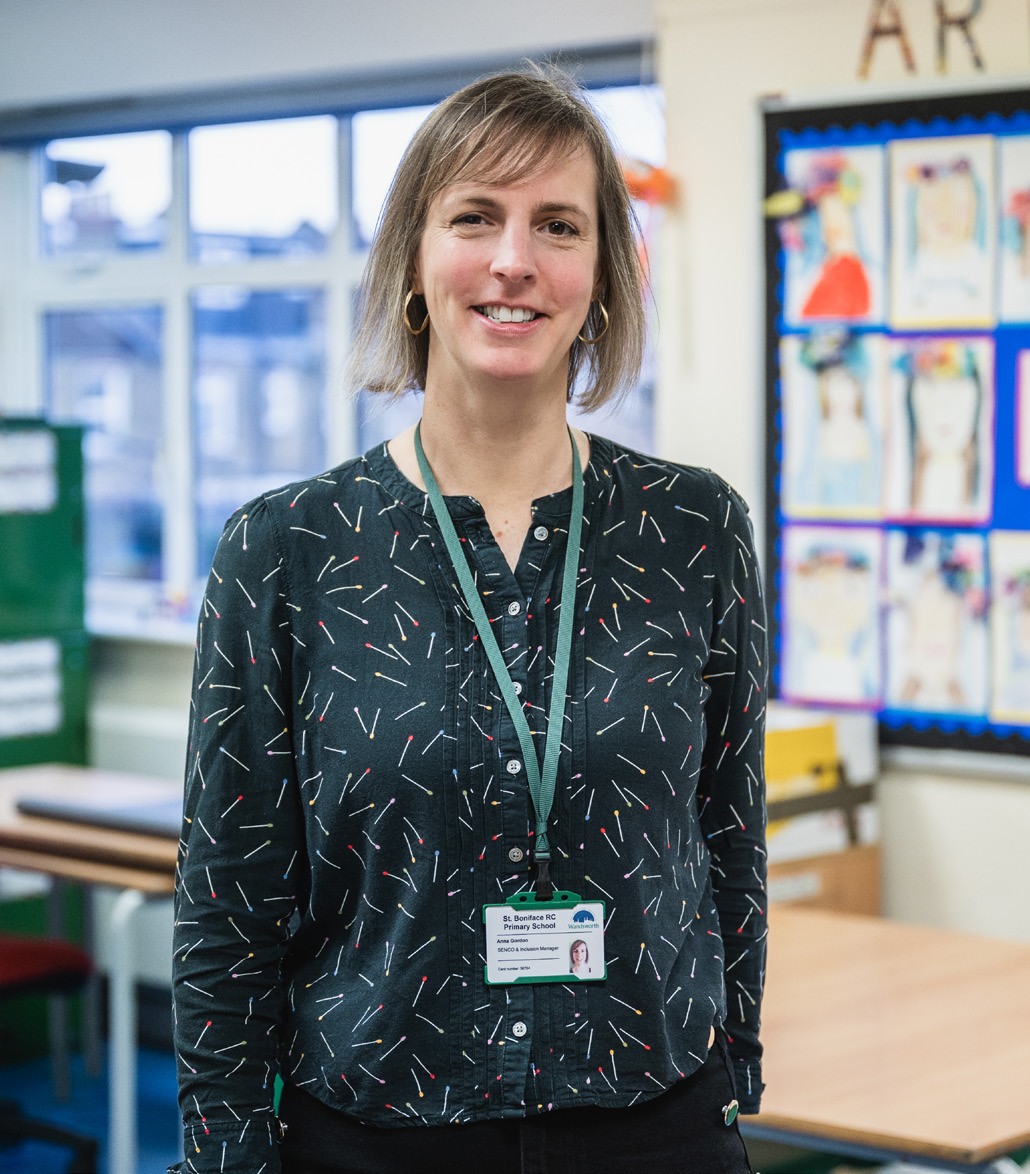
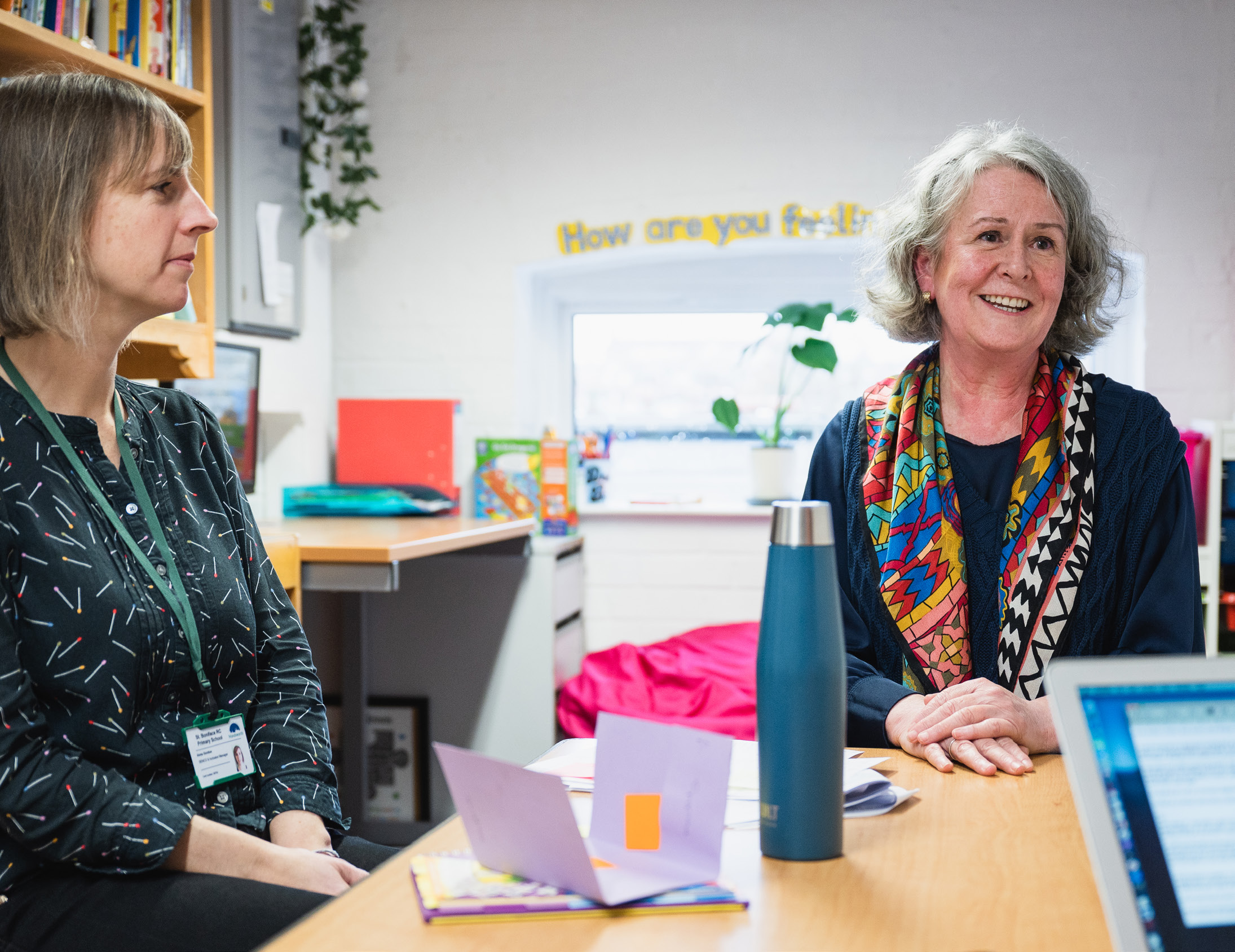
“Multiple learning differences can lead to literacy challenges. A lot of our children have difficulty in other areas besides putting things into long-term memory,” says Anna Gordon, SENCO teacher at St Boniface who is hugely enthusiastic about working with Josa.

Josa currently supports four pupils one to one, taking them out of their class to work in the cosy intervention room every Wednesday, and coaches the TAs of two pupils. Josa is a big fan of using what pupils can do to scaffold what they can’t do to move their progress on. Little and often is the aim.

We prioritise spending on the service to ensure that those children who are most at risk of leaving in Y6 well below in reading and writing are supported to close gaps and become more literate. 

Lisa Platts, Headteacher

Josa, as a literacy specialist from L&NSS, also helps parents at coffee mornings debunk literacy myths. She encourages parents to stick with one book, ask their child questions about the story and value the way repetition embeds skills and teaches patience, resilience and stamina. “You need four exposures to learn new words as a minimum to be able to reliably recognise it four days later,” says Josa who trained as a barrister before becoming a teacher and starting work for Wandsworth. 

Anna is hugely supportive of Josa’s work at St Boniface, telling her: “Teachers love the fact you say we can adapt this lesson and make this book accessible. You come in with resources and give so much to the whole community. Our targeted students make amazing progress.” 

“My personal joy is taking someone who isn’t accessing classroom learning and is withdrawing from reading or spelling activities to a space where they begin their journey on the literacy continuum. In six to nine months that child is reading and is confident. The specialist rationale for teaching and learning is evidenced based, and it works! After learning how to apply phonic knowledge and build reading fluency skills, pupils begin to express themselves confidently in writing and engage with supportive technology,” explains Josa who personalises learning during teaching sessions.

“It is vital for success with learning that these pupils build skills around their areas of interest, so if they love Lego, I will find books about Lego, or about animals etc., and try to make lessons as multi-sensory as possible, to reduce the fear of engaging at the word level. We also gradually build automaticity with common words for reading and spelling. We might have five common words, that children should recognise instantly. Those words go into the classroom twice a day to be rehearsed. Then I drip them into a short paragraph about what the child is interested in to give further weekly practice encountering these target words. Having a grasp of these most common words really makes a difference to the child’s perceptions of themselves as learners and they begin to feel ‘I’m reading’.”

It’s money well spent every single year. Josa’s impact is clear to see. 

Lisa Platts, Headteacher

Patience, fun, repetition helps the students ‘get’ reading at St Boniface. “Children who have persistent literacy difficulties, need so much repetition, over and above what their class teacher can give. As a class we will look at the use of ‘its’ and ‘it’s’, when many children have got it, we can’t keep revisiting with the whole class, we need the class to keep moving on. So, if a child has a particular literacy difficulty, our words will be on their desk. It’s about getting into children’s long-term memory. For a lot of children their memory is a real challenge, and they forget. They need the repetition of words and Josa’s picture cues really help with retention,” says Anna. 

“When working on phonic knowledge, which is essential for reading and spelling success, I teach children not only to recognise patterns, but to understand them. Language is a big puzzle or jigsaw … suddenly children get the penny drop moment and begin to understand language rules and be inquisitive about the language code.” explains Josa.

It’s the way students progress that keeps St Boniface using L&NSS. “It’s terrible if children leave primary school illiterate. We want all children to read and write to functional level,” says Anna. Another colleague sent a message to say, “In addition to the support and self-esteem Josa provides children, she is always happy to share her expert advice with teaching colleagues. Despite her time being very tight, she always finds a few minutes as we pass each other in the corridors, or via email to share strategies to reinforce spellings, a book choice that will work perfectly well for a student that is working at a different level to their peers, or a way to adapt a text so a child can access it in class. These insights are invaluable.”

stboniface.wandsworth.sch.uk

Doing Difference Differently

Read our latest report on empowering schools to deliver equitable education for all.