Categories
Brilliant Learning

 Wanda Gajewski: Click With Care

Subject: Information and Communication Technology

Topic: E-Safety

Age Group: Upper KS2

Synopsis: Most children are familiar with basic internet safety rules. However, these are simply not enough to keep them safe online. This fantastic pack features all the resources which you could need to raise the awareness among KS2 pupils about online risks, safety and behaviour. It will provide interesting topics for discussions about being online and e-safety. Pupils will learn how to use internet comfortably, safely and responsibly and consider the hazards and risks in their activities online, writes Wanda Gajewski from our Brilliant Learning, Learning Resources Service.

Exploring the topic of e-safety has the potential to inspire your pupils’ ambitions to become the computer engineers and inventors of the future.

Wanda Gajewski
Wandsworth LRS

Librarian’s view:

There are also more than 800,000km of underwater cables carrying Internet data across seas and oceans.

All through history humans have invented things. We create new ideas and technology to help us in our everyday lives. These inventions often lead to huge changes. When William Caxton brought the printing press to England in 1475, he changed the lives of thousands of people, putting reading and education within their reach for the first time. When Tim Berners-Lee invented the World Wide Web over 500 years later, he changed the world all over again.

The digital world offers many benefits for children, helping children to learn virtually, entertaining children and helping friends to stay connected. However, the internet brings significant challenges when it comes to how to keep children safe online.

All evidence indicates that children who are taught how to use the internet safely and correctly gain valuable skills and are more successful at everything they do. It is also critical that constructive online habits are established by the age of 10 or 11 to help prevent sexting, bullying and hurt online.

Birth of the World Wide Web (WWW)

Tim Berners-Lee was born in 1955, when the world was a very different to the one that your pupils know today. People didn’t have computers or game consoles in their homes. Tim loved science and maths, so after leaving school he went to Oxford University to study physics, the science that looks at natural matter and energy.

Tim wrote some computer programs that helped him take information from one computer and put it on to another one. He wondered if all the computers could be linked together so that information could be shared quickly and easily. However, he knew that the computers could not give us all the information that we wanted, but they could help by making the information easier to find. They could even give us the information at the touch of a button.

Tim had to build a framework  that would connect all the world’s computers together. He decided to call the framework World Wide Web. In 1991, he launched the world’s first website – http://info.cern.ch. It was a giant stepping stone towards reaching the internet that we have today. Tim Berners-Lee’s idea was so brilliant that it spread around the world quickly. Today it’s hard to imagine a world without it.

Staying Safe Online

The world of computers is often called the digital world. Children sometimes think that the digital world and the real are separate. But they will learn that the digital world and real life are connected. Just like in real life the main danger on the digital world comes from people who are dishonest.

Children will develop their knowledge on how computers and the Internet work together.

Almost all computers use the internet. The internet is a network of computers that covers the whole world. It allows computers to communicate with each other. Children who have a computer, tablet or phone can connect to the internet and socialise with friends, watch videos and play games. They need to be sensible and careful to keep themselves safe when they download and upload information.

Your digital footprint

Your pupils may be surprised by the idea that almost everything they do on a computer adds to their digital footprint. The digital footprint is made up of information about how someone behaves online. It might include what they have searched for on the internet, pages they have visited and even their location. The pupils will learn that someone’s digital footprint makes it possible to build up a picture of what kind of person they are. It shows things they are interested in, how many friends they have and the area where they live. Therefore, children need to be careful what they say online.

Personal spaces

Children will learn that a person’s online identity is not the same as a digital footprint. An online identity contains all kinds of information. Often it is based on popular social networking sites, which allow users to set up a profile.

Children will learn that in order to open their pages to post updates, photos and messages they will have to log in. The most important way of keeping information safe is by using a password. The password should be a mix of letters and numbers. The strong password is a nonsense word that will still be easy to remember. But if someone else guesses or finds their password, they can pretend to be them. This is called identity theft.

Click with care
The internet is used by people with widely varying interest. Children will come across materials that are not suitable for young people. Some adult material is sexual, and some of that is pornography. If children feel upset by materials that are not suitable for them, they should close the page and move on. However, they must notify the teacher or parent/carer. If children use a search engine to look for information, they need to read the little block of text about the pages found before clicking on the link.

And don’t be fooled! Facts on websites are not always true or up-to-date, so always be careful when you are searching for information.

Cyberbullying

Your pupils will learn that there are bullies online, just as there are bullies in the real world. Online bullying is called cyberbullying. Although it doesn’t cause physical harm, it is very upsetting because it can happen at any time – even when the children are at home.

Cyberbullying takes many forms. It can be nasty messages sent by phone or e-mail. It can include being abusive or ridiculing someone on a social networking site, perhaps by posting embarrassing photos or videos of them. Deliberately not letting someone join a game or chat is cyberbullying as well.

Children must remember to log out of their account when they finish using a shared computer.

Classroom activities

Classroom activities reinforcing the topic of E-safety

There are several great sites that explore the subject of staying safe online through games and videos, including:

Project Resources

To help your classroom click with care, use books such as:

Let’s Read and Talk about Internet Safety by Anne Rooney

Keeping Safe Online
by Anne Rooney

Computer Networks
by Clive Gifford

Understanding Computer Safety
by Paul Mason

Chicken Clicking
by Jeanne Willis

Book your
Head to Head

If we have piqued your interest in Smart School Services, why not meet with our head team to see how we can work together. To arrange your Head to Head, or for any other enquiry, simply fill in the contact form and we’ll be in touch shortly.
Categories
Brilliant Learning

Wanda Gajewski: Hands on History

Subject: Cross curricular

Topic: Learning from objects

Age Group: Whole school

Synopsis:

Why use artefacts (objects) in the classroom? Artefacts can be used in a wide variety of ways to enrich your teaching – they may be easier to understand in 3D or appeal to the senses and generally excite children’s interest.  What’s better to remember the parts of the body than by removing them from a model torso? How much easier is it to bring other cultures alive with dramatic, evocative icons and (if appropriate) religious artefacts?

This post from Wanda Gajewski, focuses on ways teachers can use objects for effective classroom teaching. Pupils will develop a wide range of deductive and analytical skills when handling objects and children with learning or language difficulties can participate fully in handling sessions.  It will enhance both your teaching and your pupils’ learning and thus provide inspiration and pleasure for all.

Librarian’s view:

Don’t we all just detest those country houses or museums which make it plain to us that we shouldn’t be touching anything? Of course, some objects should be kept behind barriers, but we like touching objects. Even replicas may inspire your children more than discussion or the written word.

Traditionally teaching has evolved around books and reading. However, the value of using real objects has been realised even within the National Curriculum. The History Curriculum requires pupils to use a range of information sources including artefacts. An object can be used for information or as a creative stimulus. Sometimes handling objects is a form of active learning that engages pupils in a way that other methods may be unable to match.

Artefacts are an ideal way to introduce a new topic or new area within any subject. They give hands-on experience and are a wonderful way of exciting children’s interest and engaging them in questioning, thus helping them to develop critical thinking skills for themselves. The questions can lead on to investigation and research as the children discover some of their own answers. For best effect, the artefacts should be presented singly or perhaps two at a time at most. The more active the presentation, the better it will be remembered, and the more questions will be asked.

Artefacts should be chosen with thought and introduced with proper planning. Think carefully how to introduce items as some may invoke laughter or perhaps distaste. For example, some children may find a made-up starched turban strange, others may dislike the bright colours typical of many images of Hindu deities.

Handling objects is a fantastic experience for pupils and it can also help them develop skills such as handling, observing, comparing, deducting and evaluating. A good way to develop close observation is to start with a familiar object. It might be a piece of classroom furniture, such as a chair. Children will be guided by you through the observation and deduction stages and finally they conclude that the chair is made of wood.

Investigate a Mystery Object

One good way of encouraging observation and deduction is to provide pupils with a mystery object. It is not always easy to find something which no pupil will have no seen before. Some objects from the Roman or Victorian period will usually suffice. Holding the objects in their hands helps the pupils to concentrate and reach conclusions based on the evidence.

The idea of sharing a mystery object is for the students to take away the knowledge about what it is called. This exercise helps pupils focus on thinking carefully and reaching conclusions based on their deduction. For the purpose of this post the names of the mystery objects are revealed.

Metal Strigil

In Roman times this unusual artefact was used after a hot bath to remove cleansing oils by scraping the skin.

Victorian Warming Pan

The warming pan was used in beds to warm them, and also to try to remove some of the damp. The pan was filled with hot charcoal or ashes and pushed into the bed.

Bring Ancient Civilizations into a Classroom

Sarcophagus and Mummy

Ancient Rome

Stone Age Flint Tools

Mayan God of Maize

Science and Geography

Chinese Utensils

African Wooden Shakers

Peruvian Musicians

Japanese Warrior

Bolivian Chullo Hat

Giant Compass

Basic Rock Set

Horseshoe Magnet Set

Religious Education

Nativity Scene

The Qur’an Set

Chanukiyah

Buddha

How did it go?

Feedback from schools has been very positive:

‘’Thank you so much for all the artefacts for his term. The prehistoric artefacts were brilliant – the kids got so much out of handling them!’’

‘’We had a very successful lesson looking at some of the Roman artefacts and trying to guess what they were, before doing research to find out.’’

Teachers from two Wandsworth primary schools

Artefact collections are available to borrow as part of subscriptions to our Learning Resources Service. To find out about what is available for your school, book a Head to Head today.

Book your
Head to Head

If we have piqued your interest in Smart School Services, why not meet with our head team to see how we can work together. To arrange your Head to Head, or for any other enquiry, simply fill in the contact form and we’ll be in touch shortly.
Categories
Brilliant Learning

Gwen Sinnott: Return to Statutory Assessments

We are gearing ourselves up for the summer assessment period, with Primary Statutory assessments back on the table and Secondary exam season results back in the public domain, we have much to do.

Hang on a minute… but what about all the other stuff we have started doing?!

Powered up with Power BI

Part of our growth has been in developing our expertise building tools to help support easy access to intelligence for schools. We have used Microsoft Power BI to pull data sets together and generate interactive dashboards on several intelligence themes. We are planning to embed some of these into the Research & Evaluation Unit website so you can easily find comparative and historic data about your school for specific needs.

Bringing it together

We are so looking forward to pulling the new assessment data together to bring you new presentations of school’s performance alongside established reports, more guidance and training and offer more bespoke solutions where you want them. We are looking forward to seeing comparative progress across Key Stages once we finally have a formula for this using new assessment measures, but we are like that! Join us this year to celebrate the hard work you have put into safeguarding and guiding the learning of children and young people.

Joining up

We have had a busy year developing and connecting more robustly with other teams in Childrens Services, meaning we have a more holistic (data) picture of cross service needs and outcomes. For example, the social care list for schools has been a real step forward for supporting vulnerable pupils.

Book your
Head to Head

If we have piqued your interest in Smart School Services, why not meet with our head team to see how we can work together. To arrange your Head to Head, or for any other enquiry, simply fill in the contact form and we’ll be in touch shortly.
Categories
Brilliant Learning Empowering Professionals Intelligent Operations

Michael Hallick: Lessons for the Future

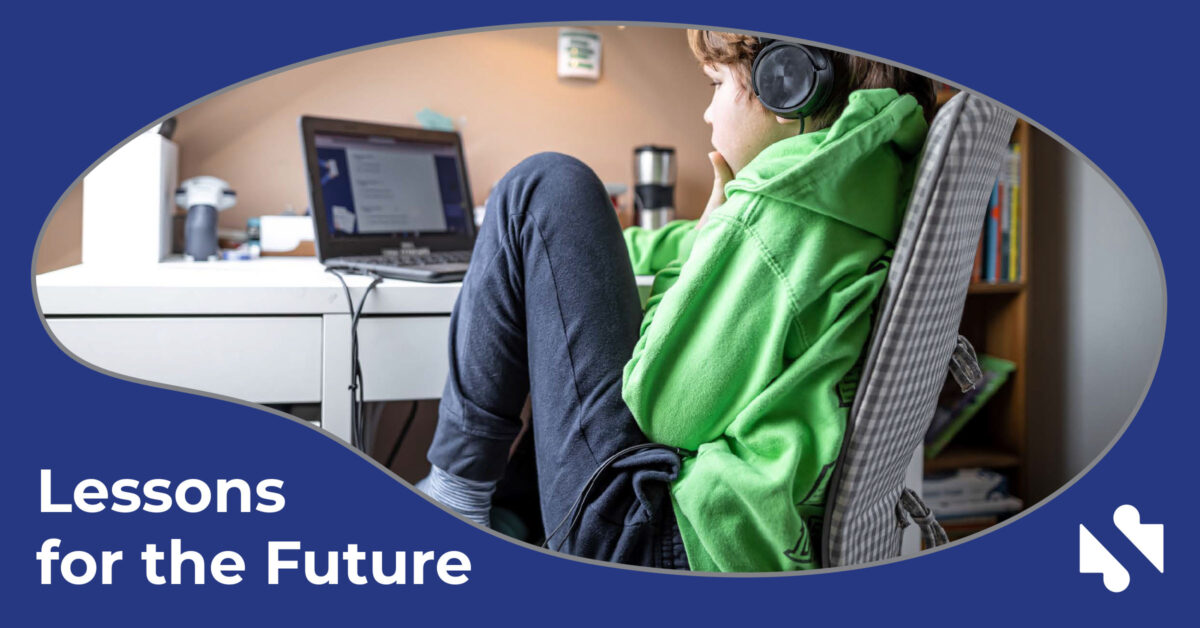
Without warning, the Covid pandemic upended school life across the UK. Overnight, headteachers had to establish remote learning, absorb and implement an avalanche of guidelines and advice, while supporting students, parents and staff academically and emotionally. The scope of the crisis and the subsequent reopening have created distinct challenges, but also highlighted potential opportunities for whole school positive change.

The Future is Now

There is little doubt that the pandemic has stretched resources, accelerated trends and highlighted inequalities across the education sector. But while significant challenges remain, this is also a time of exciting opportunity as we learn the lessons from the largest disruption to education in living memory. 

As we step into the ‘new normal’, it is imperative that we allow room for analysis and reflection. To think about the bigger picture. Where joined-up collaborative ideas help to connect a wide range of tailored services to benefit all aspects of a school’s ecosystem.

That takes time.

And we understand that time is a precious resource. Schedules are unforgiving and workloads unrelenting. 

It is the main reason behind publishing Lessons for the Future – to start a discourse – to show that if we all collaborate to create and implement best practice, we can alleviate pressure on teaching professionals while realising the best future for schools.

A future, for example, where technology not only supports learning, but helps to realistically reduce workload, increases operational efficiencies, engages students and communities, and provides tools to support excellent teaching, monitors attendance and raises student attainment. In short, creating a smart school.

We hope you find value in Lessons for the Future. We hope it inspires ideas and sparks debate. That it opens a discussion on what is positive and achievable as we pivot to realise the opportunities of post-pandemic education. And we would like to be part of that discussion. 

Michael Hallick
Assistant Director – Business and Resources
Wandsworth Council

Book your
Head to Head

If we have piqued your interest in Smart School Services, why not meet with our head team to see how we can work together. To arrange your Head to Head, or for any other enquiry, simply fill in the contact form and we’ll be in touch shortly.
Categories
Brilliant Learning

Mental Wellbeing and Resilience

Responding to the changes that Covid-19 has wrought on learning requires building on what we know works, as well as looking ahead to what we know students will need.

Although it may seem overwhelming, the time to start reimagining the future of education is now.

Learning is not limited to the classroom, and its complex, multi-faceted delivery shouldn’t rest on the shoulders of any one individual. We believe brilliant learning environments are created through collaboration and a comprehensive, whole school approach. 

Mental Wellbeing and Resilience

The problem of child and adolescent mental health is large, complex and growing. Over one in three young people (34%) said that their mental health has got much worse during the pandemic. As the fallout from the pandemic unfolds, we need to be ambitious if we want young people to live happy, healthy lives. 

The challenges young people face are hugely varied – from stress and anxiety about exams to incredibly serious and debilitating long-term conditions. Schools are already working hard to support their pupils’ mental health. 

The future lies in supporting schools to develop whole school approaches to promoting resilience and improving emotional wellbeing, preventing mental health problems from arising and providing early support where they do. Evidence shows that interventions taking a whole school approach to wellbeing have a positive impact in relation to both physical health and mental wellbeing outcomes. In addition, providing mental health awareness training for school staff has significant positive effects on their confidence, mental health literacy, and behaviour in supporting pupils. 


Community Led Recovery

School leadership teams do not have to feel alone or lost in their efforts to help pupils, families and staff regain their strength. Successful community recovery comes from the vision, dreams, hopes and challenges of community themselves. 

Smart School’s Psychology Service are providing support on various initiatives including Planning Alternative Tomorrows with Hope (PATH), SEMH audit and Reflective Space for teachers.


Data Deep Dive

Smart School’s Research & Evaluation Unit have access to a wealth of data, from national research to contextual analysis of internal assessment and testing within schools. One of the key challenges for School Leaders is understanding the nuances, which is why the REU team offer data surgeries – a 1-1 session to discuss data management or analysis questions.


Book your
Head to Head

If we have piqued your interest in Smart School Services, why not meet with our head team to see how we can work together. To arrange your Head to Head, or for any other enquiry, simply fill in the contact form and we’ll be in touch shortly.
Categories
Brilliant Learning

Re-engage Persistent Absentees

Responding to the changes that Covid-19 has wrought on learning requires building on what we know works, as well as looking ahead to what we know students will need.

Although it may seem overwhelming, the time to start reimagining the future of education is now.

Learning is not limited to the classroom, and its complex, multi-faceted delivery shouldn’t rest on the shoulders of any one individual. We believe brilliant learning environments are created through collaboration and a comprehensive, whole school approach. 

Re-engage Persistent Absentees

Every lesson that we can prevent a child from missing is another step taken to a brighter academic future. It’s why we must address the Centre for Social Justice’s findings that by the end of 2020 almost 100,000 UK pupils were missing from more than half of their lessons, even after Covid absence is accounted for. 

The causes of persistent absenteeism are complex and numerous, often relating to the most vulnerable young people in the system. While not a new problem, it has been exacerbated by the Covid pandemic which has led to some pupils becoming more disengaged. In addition, disruption to funding has led to vulnerability across support services for schools – impacting the school’s ability to tackle absenteeism. 

To pivot persistent absenteeism from ‘too difficult to fix’ to ‘all in class’ will involve a sustained commitment from all involved. Government funding is crucial, but so is having robust procedures in place for day-to-day management of attendance. Whether implementing effective tracking data or targeting pupil premium funding, Smart School Services can support schools to help break down barriers to children being in school. 


Building Attachment

A central theme for Smart School’s Education Welfare Service is building attachment between staff, parents and pupils. Promoting a strong sense of belonging and making positive human connections. Developing a School Attachment Plan might include peer support programmes, circle time, rights respecting schools, school council, friendship groups or learning mentors, to name a few. 


Assistive Technology for SEND Pupils

Creating a school environment that takes down barriers is a central part of addressing absentees. Assistive technology plays a key role for SEND pupils, supporting them to be more independent and maximise their potential. Offering more options for alternative recording, text to speech, graphic organisers, access to online resources, immersive readers and online manipulatives for recording in maths. Smart School’s Literacy & Numeracy Support Service can offer advice on what’s best for your pupils. 


Book your
Head to Head

If we have piqued your interest in Smart School Services, why not meet with our head team to see how we can work together. To arrange your Head to Head, or for any other enquiry, simply fill in the contact form and we’ll be in touch shortly.
Categories
Brilliant Learning

A Space for Curiosity

Responding to the changes that Covid-19 has wrought on learning requires building on what we know works, as well as looking ahead to what we know students will need.

Although it may seem overwhelming, the time to start reimagining the future of education is now.

Learning is not limited to the classroom, and its complex, multi-faceted delivery shouldn’t rest on the shoulders of any one individual. We believe brilliant learning environments are created through collaboration and a comprehensive, whole school approach. 

A Space for Curiousity

Spaces that support a school’s reading culture allow learning to flourish. According to the OECD, “Reading for pleasure is more important for children’s educational success than their family’s socio-economic status.”

Ideally, the future for all schools should include an expansive library boasting the latest ICT resources, stocked with a diverse set of books from a wide variety of types and genres; coordinated by a dedicated librarian. But that simply doesn’t reflect reality. 40% of primary schools have no budget for a school library. Where libraries do exist, competition for funding means they are often under-resourced with inadequate stock and no librarian or staff members to oversee them. 

How can we close the gap and address the inequality of provision? The answer lies in working together. Supporting schools to manage their resources strategically, utilise their space intelligently and maximise independent learning opportunities. By acknowledging the role a physical space – library, reading corner or study area – plays in teaching children to be readers, we can build best-in-class provision within the parameters of what is possible.


Beyond Books

Meeting the needs of an ever-diversifying curriculum is not easy. Working hand in hand with teachers, librarians from Smart School’s Learning Resources Service research, suggest, and select books, artefacts, equipment, and DVDs from their vast library. Library staff will compile items according to your specific request. All delivered in a ready-to-go resource box. 


Book your
Head to Head

If we have piqued your interest in Smart School Services, why not meet with our head team to see how we can work together. To arrange your Head to Head, or for any other enquiry, simply fill in the contact form and we’ll be in touch shortly.
Categories
Brilliant Learning

Mark Holliday: Anti-Bullying Week 2021

As we approach Anti-Bullying Week this year, it’s important to be reminded that preventing and tackling bullying is something we do all year round – and getting the basics right is key to achieving this.

This year’s theme for Anti-Bullying Week is ‘One Kind Word’.  Schools up and down the country, including yours, will be delivering assemblies and classroom activities, celebrating Odd Socks Day on Monday 15 November, and holding a ‘Friendship Friday’ on the 19th.

All these things help to shine a light on the issue, but what next? What do you do the week after? Well, it may be a good time for you to consider reviewing and updating your policy and practice and considering how effective your whole school approach to dealing with bullying really is.

Research shows the whole school approach key to success and is what getting the basics right is all about. Involving everyone is the most important way to keep children safe from harm and safe to learn – from parents/carers and school staff (including catering, office, and cleaning staff, not just teachers and TAs) and – front and centre – your pupils. 

To help review your whole school approach, consider the Anti-Bullying Alliance’s ‘Ten Key Principles’:

  1. Listen – take the time to consult with your stakeholders. Everyone in the school community will have something important to share, whether it be their experiences, ideas, or concerns.
  2. Include all – make sure you involve those most vulnerable to bullying. These can be children and adults with SEND, young carers, and traveller families.
  3. Respect – school staff are role models to children and parents/carers alike. It’s their duty to protect children and to treat all fairly. School staff set the tone of the school and embody the culture and ethos.
  4. Challenge – words matter, and discriminatory language should be challenged and taken seriously every time it is heard or reported.
  5. Celebrate difference – make everyone feel welcome at your school by ensuring all communities are visibly represented and that your school ethos is one that values uniqueness.
  6. Understand – ensure everyone in your school community knows what bullying is and what it isn’t. You can do this by following principle number 1.
  7. Believe – children and adults must be able to trust that your policy and practice is reliable and robust. Children need to know when they report bullying to an adult they will be believed and taken seriously.
  8. Report bullying – it is important pupils and their parents/carers know how to report incidents of bullying. Schools must have an effective system to collect this information. Ofsted inspectors ask for schools’ data and will want to know what you are doing to prevent and tackling bullying as a result.
  9. Take action – respond quickly to all incidents of bullying. Make sure children affected are involved in what happens to them. Consider implementing a restorative approach to dealing with conflict and the harm caused, if you haven’t already.
  10. Have clear policies – actively involve the school community in writing and reviewing your anti-bullying policy. Make sure pupil voice is loud and clear within it. Make sure it links to other policies, such as the behaviour policy, equalities, online safety, etc.

Support for schools to prevent and tackle bullying, and improve policy and practice is available all year round. 

Book your
Head to Head

If we have piqued your interest in Smart School Services, why not meet with our head team to see how we can work together. To arrange your Head to Head, or for any other enquiry, simply fill in the contact form and we’ll be in touch shortly.
Categories
Brilliant Learning

Mara Grkinic: from classroom to National Gallery exhibition

Now in its 26th year, the National Gallery stages an annual exhibition called Take One Picture, and invites primary schools nationwide to take part by focussing on one of its paintings and responding creatively to its themes and subject matter, historical context, or composition. The programme aims to put art at the centre of children’s learning across the curriculum, inspiring a lifelong connection with artists’ work, museums and galleries. 

Paolo Uccello The Battle of San Romano probably about 1438-40 Egg tempera with walnut oil and linseed oil on poplar, 182 x 320 cm Bought, 1857 NG583 https://www.nationalgallery.org.uk/paintings/NG583

For 2021, the National Gallery selected The Battle of San Romano (painted probably about 1438–40) by Paolo Uccello as the source of inspiration. The painting shows a key moment in the Florentine victory at San Romano in 1432, with the commander Niccolò da Tolentino leading a cavalry charge and wearing a magnificent red and gold hat. Uccello’s painting was chosen for the cross-curricular themes and subjects which can be explored: from conflict and battles, to pattern, perspective and Renaissance Italy.

A selection of work produced by schools, based on the painting, is then shown at the National Gallery and published on the website. In order to be considered for the display, schools submit examples of how a whole class or school has used the picture to inspire projects that are child-led and cross-curricular and through which children have learnt a new process and involved members of the local community.

Alderbrook was one of 30 primary schools chosen this year to have their work displayed at the National Gallery and Mara Grkinic, teacher and Creative Arts Lead at the school describes the creative journey of pupils in Year 5 (Summer 2020) through to Year 6 (Spring 2021) when the project ended. Beginning with an online workshop with a professional animator, collaboration with the City Learning Centre (CLC), to how they resolved some of the practical and technical challenges of remote learning during the periods of lockdown. 

For the last four years, the school has taken part in this national art project, looking at the chosen painting and deciding how to use the image imaginatively, both as a stimulus for artwork, and to make links across the curriculum. Obviously this past year, going into lockdown meant the school could not do the project as normal, because the children did not have access to the usual resources available at school. Throughout May, June and July 2020, each year group explored the painting, focussing on different art skills and what interested them about the painting. In September, each year group then had a focussed art skill to develop.

The project aim was to do something cross-curricular, so looking at different aspects of the curriculum, whether art and media, art with maths, or art with textiles etc. It should also include the local community and the children learning a new skill. Our new skill was to learn all about animation techniques and software. Most of the pupils were already aware of stop animation, so not a new thing. A massive factor in us choosing to do this option was because of lockdown. I gave the pupils a choice, explaining that we were going to do an art project and here is a list of things that you can do. On the list was animations; can you use objects at home to try and recreate the picture; the option of looking at shadows; maybe a textiles project with the armour and hat; another option was looking at colour in the picture and why the artist had decided to put pink on the floor. I drew up a big grid of all the options and then asked the children to choose. Most of the pupils messaged back straight away via Google Classroom saying that they wanted to do animations! It was far quicker and easier for them to do this online, the pupils were already familiar with using Google Classroom, as they had already been doing a lot of online learning throughout the lockdown. The alternative would have meant dropping off painting materials etc to all of their homes. 

The decision to use stop animation was also helped by the pupils having an online workshop with Scott Castles, who is a professional animator from Castles Create. Scott showed us how to sketch something using the software he uses, which is far more advanced, but as a class we decided that as we didn’t have that kind of software, we would need to make a stop motion. It was at this stage that Alex Purssey and David Owens from the CLC came onboard with the project, and suggested that we brainstorm ideas and source a suitable app such as iStopMotion.

The CLC setup a workshop with the pupils on how to use the app and whilst this software was new to the class, some of the pupils were already quite tech savvy having used various other apps, but most of them had not used iStopMotion before. 

The creative and technical input provided by the CLC gave us the confidence and expertise we needed to complete the images and video ourselves. The children were highly motivated using the new technology and we gained fantastic new skills to use in the future!

We had been chatting on Google Classroom during the first lockdown in March and April and had discussed how could we link the story of the painting to what we were passionate about at that time. The children said that they could do our modern day battle with COVID, as this is also an historical battle. 

As a year group of 41 pupils, it gave us a lot of scope to create a great deal of animation footage. We then decided to spilt the COVID story up so far, spilt the historical battle, and then working in pairs to decide how we could recreate both parts of each story. 

My class did the COVID version and the other class in the year group did the other version of the battle with the horses. We decided that if we split the story up, we could include everything that the children had experienced from their own viewpoint. One pupil talked about the massive stock-piling that went on in her family. Everyone remembering the build-up before the first lockdown, going to the Co-Op and Sainsburys in Balham and nothing on the shelves. The pupils had quickly realised they couldn’t go to the cinema, the theatre etc, so they decided to do a animation on that. Once we got all our ideas together on a timeline, we started making the backgrounds.

The children composed the background music using the Garage Band app and they spoke on the piece that links to COVID, creating quite an emotional feel to the whole piece.

I was really conscious that during lockdown many of the children would have extended time at home with nothing much to do, so we decided to also use that time creatively and really threw ourselves into creating a virtual reality gallery on a website called Artsteps VR. This online gallery showed examples of work and how all the year groups had looked at the painting in a different way. We sent a Powerpoint presentation to the National Gallery outlining why we should be one of the schools chosen. We then received the fantastic news that we were one of the schools shortlisted and that we had a place in the exhibition.

Alderbrook school is well-resourced with iPads, chrome books, laptops, interactive whiteboards and has the use of a state of the art Mac computer suite. The school is also fortunate to have the support and expertise of the City Learning Centre (CLC) who are based on site and available to support staff and pupils, ensuring they have the very best computing curriculum available to them. The CLC’s advice and support on this animation project was invaluable and we are looking forward to working with them again on future IT projects.

The CLC also helps schools establish their computing, media, coding and photography clubs that support hundreds of Wandsworth learners develop specific skills that excite and inspire them. These clubs have grown massively across all year groups with some schools running them at lunch time and after school with older students delivering them as Computing Ambassadors.

Digital literacy, creative arts and film-making projects are available to all schools who have purchased a CLC package. The innovative computing curriculum tutors continue to support schools in class and with special stand out projects like this one. The Digital OrchestraRaspberry Pi environmental challenge and Lego Robot Wars have all been recent projects the CLC has helped schools participate in and to engage pupils with computing and stretch their knowledge.

ANIMATED BATTLES

Alderbrook Primary School, London, 10–11 year-olds.

The pupils used animation to show links between ‘The Battle of San Romano’ 

and our modern-day battle with Coronavirus.

Further information about the programme, related CPD courses for teachers, and the annual ‘Take One Picture’ exhibition at the National Gallery can be found at https://www.nationalgallery.org.uk/take-one-picture

Categories
Brilliant Learning

Mark Holliday: The ABC of Improving School Attendance

I get asked quite often about what is it that successful schools do to improve attendance. Now, I can advise schools to follow a fair and clear process – just like the one we are about to introduce called Fast Track – and there are lots of strategies schools can put in place. Also, with the support of my team, a multi-agency approach to tackling the problem can be highly effective. Lots of support is usually required for more complex cases and these deep-rooted issues aren’t always for just one service to address.

However, fundamentally for me, creating a school that builds attachment between staff, parents and pupils, that promotes a strong sense of belonging and makes positive human connections are key to a happy, safe and thriving place that everyone enjoys coming to. 

Getting the basics right with attendance brings with it all the benefits that being part of a loving (yes, loving) school community can bring, including a healthy attitude to learning that lasts long into adulthood. Schools already foster that sense of belonging in a number of ways; peer support programmes, Circle Time, Rights Respecting Schools, School Council, friendship groups, learning mentors, and the list goes on. It may be that individual pupils and their parents receive more intensive support and a School Attachment Plan is put in place.

If this is something you’d like to trial in your school, please do get in touch. In the meantime, here is some useful research on the subject – Attachment in the Classroom.

Book your
Head to Head

If we have piqued your interest in Smart School Services, why not meet with our head team to see how we can work together. To arrange your Head to Head, or for any other enquiry, simply fill in the contact form and we’ll be in touch shortly.